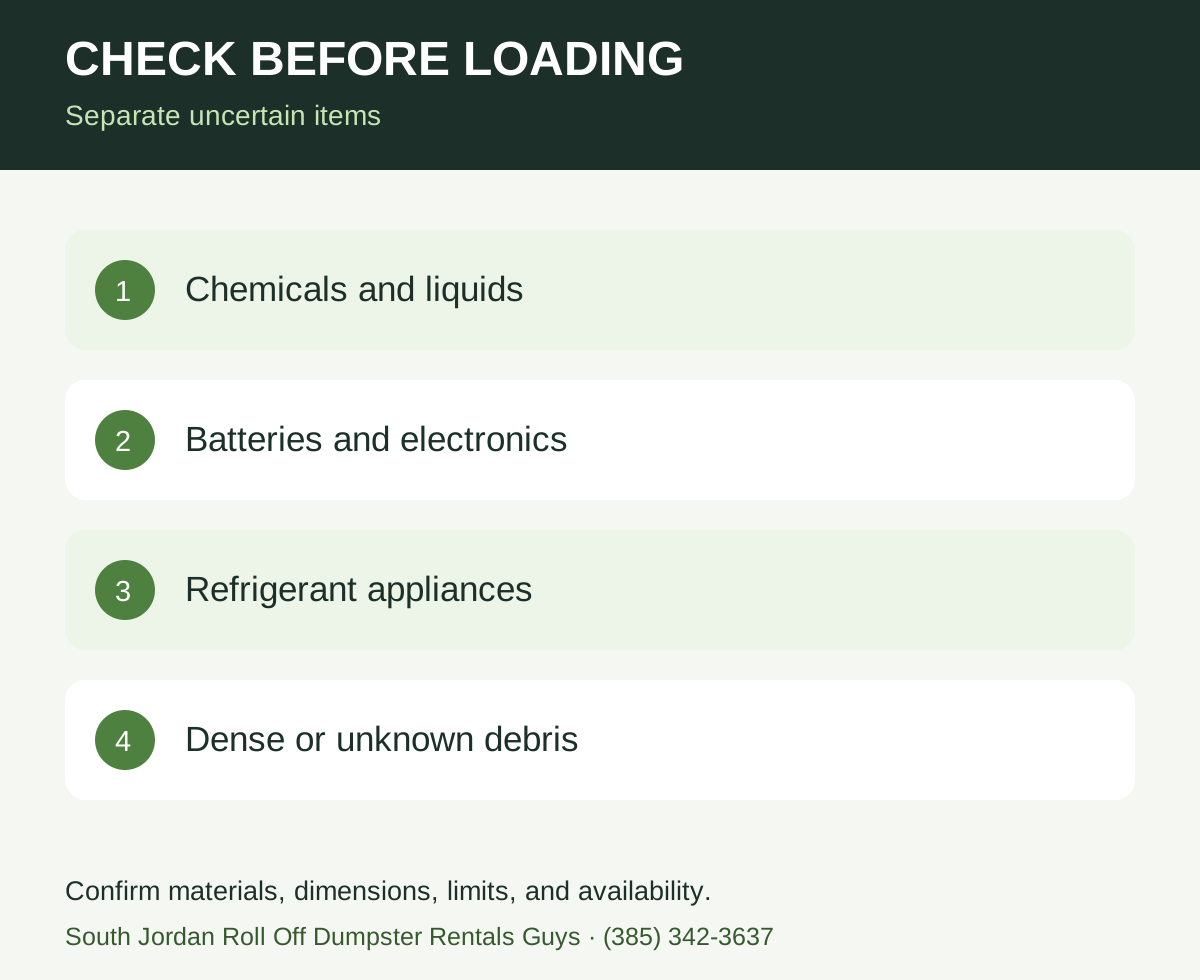
Do not put hazardous, restricted, or unapproved items into a rental dumpster. Chemicals, batteries, electronics, refrigerant appliances, and dense debris all deserve a specific acceptance check. Get the rules for your actual rental before loading. Public collection programs and disposal facilities have separate conditions that do not automatically apply to a private container.
Start with the rental's accepted-material list
Ask for a written or clearly explained list before the container arrives. Describe your main debris stream and name unusual items individually. A general phrase such as household junk can hide paint cans, old computers, lawn equipment, or appliances. Those contents can change the disposal plan even when they occupy only a small corner of the load.
Tell everyone helping with the cleanup about the same rules. One person may have discussed acceptance while another assumes everything in the garage belongs in the container. Mark a separate area for uncertain items and check them before loading. It is simpler to resolve a question while an item is still visible than after it is buried under other debris.
Keep household chemicals separate
Paint, cleaners, oils, pesticides, solvents, and similar products may require special disposal. The EPA explains that household products with hazardous characteristics need careful handling and that improper disposal can cause harm. Follow the product and local program instructions. Do not pour leftover liquids into a dumpster, drain, or onto the ground to empty a container for disposal.
Keep labels available and avoid mixing products. An unlabeled bottle is harder to assess than a known product in its original container. If the material is unknown, seek appropriate guidance instead of guessing from appearance or smell. A dumpster booking does not authorize chemical handling, and urgency does not make an uncertain substance acceptable in a general debris load.
Check batteries and electronics individually
Ask about batteries, televisions, computers, power tools, and other electronic equipment before including them. Different components and local programs can have different requirements. Do not assume that a small battery or a device concealed inside furniture is insignificant. Include these items in the inventory so the team can explain whether a separate collection route is needed.
For business equipment, consider information handling as well as physical disposal. Data-bearing devices and confidential records may need your organization's approved process. A general container does not provide secure data destruction. Keep those decisions separate from the container size discussion, and confirm acceptance directly with any electronics recipient before transporting a load there.
Ask about appliances and their contents
Refrigerators, freezers, air conditioners, and other equipment containing refrigerant need individual consideration. Other appliances may contain fluids, batteries, or electronic components. Describe the item accurately, including its condition and any known contents. Do not assume that one accepted appliance establishes a rule for every appliance or that removing a door resolves the disposal requirements.
Avoid dismantling specialized components simply to make an item fit. Ask an appropriate provider for the handling instructions. If a public program offers an appliance route, check its eligibility and current conditions before making plans. A resident drop-off rule may not cover a commercial load, a private hauler, or a container full of mixed project debris.
Treat dense debris as a separate question
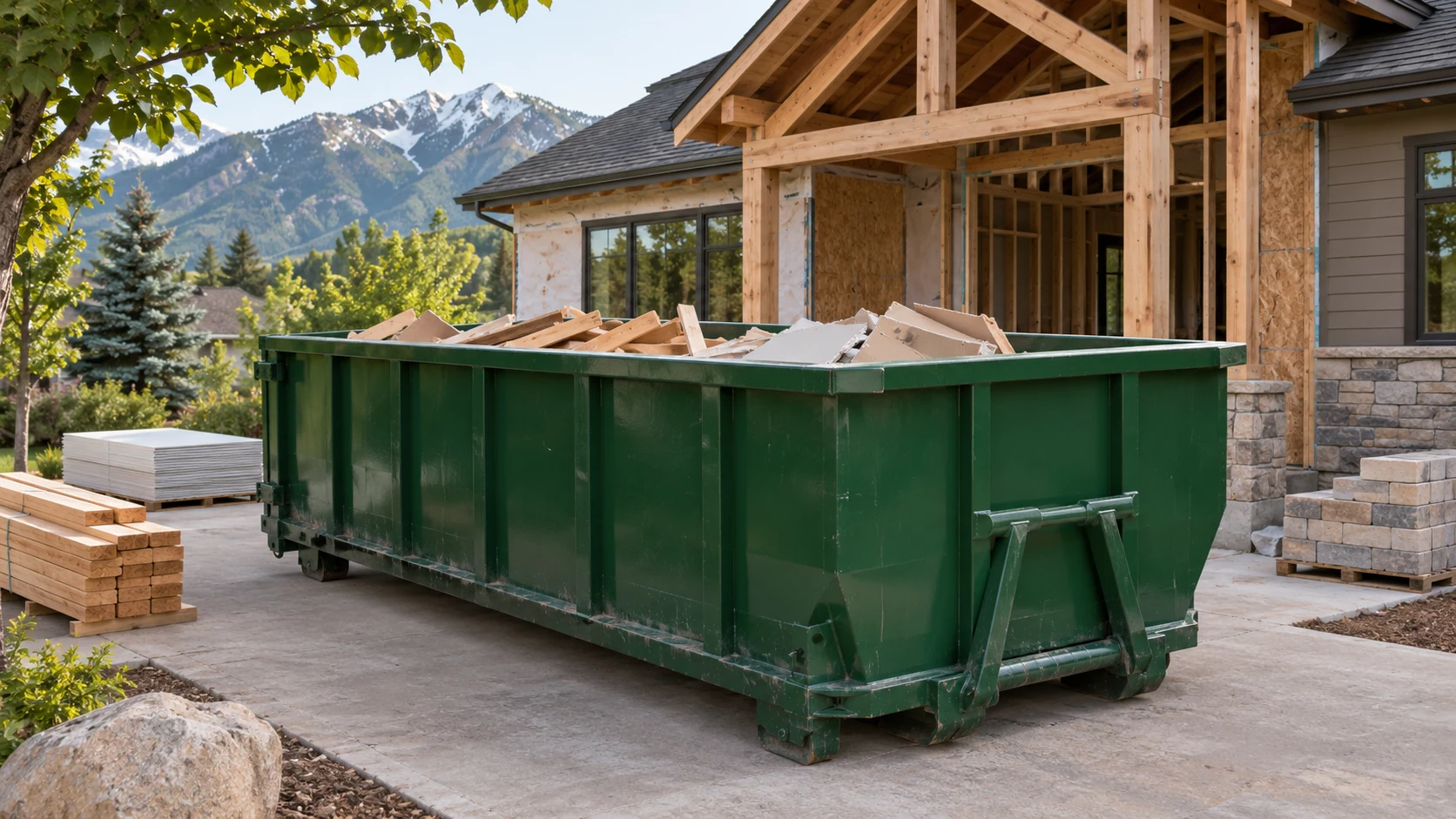
Concrete, soil, brick, asphalt, roofing, and other dense material can create a weight problem even when the container looks far from full. Tell the rental team about those materials before selecting a size. Ask whether they are accepted, whether they require separation, and which loading level applies. The container's nominal cubic-yard capacity is a volume measure, not a weight permission.
Do not mix a heavy stream into a light one to use spare space without approval. A larger dumpster does not remove transport or rental limits. If demolition produces an unexpected dense material, pause and update the team. The right next step may involve a revised plan rather than continuing to load according to the original household or general-debris estimate.
Distinguish city programs from private rentals
South Jordan publishes rules for its Neighborhood Dumpster Rental program. Those rules identify accepted and unacceptable categories for that municipal service. They are useful local context, but they do not establish this business's prices, container sizes, eligibility requirements, or material policy. Check the provider responsible for the service you actually book.
Salt Lake County publishes materials accepted at its landfill. A facility's list can help identify a separate disposal question, but direct drop-off and private container collection are different arrangements. Confirm the receiving facility, customer eligibility, and handling conditions where relevant. Do not infer that a particular business uses that facility merely because its website links to the guidance.
Handle unknown material by pausing
Stop before loading an unidentified chemical, suspect hazardous material, sealed container, or item whose contents you cannot describe. Keep people away where appropriate and seek qualified guidance for the situation. Do not open, break, drain, or mix a questionable item just to reduce its size. The rental team can discuss acceptance, but some assessments require a specialist.
Use the EPA's household hazardous waste resource to understand the category and locate the kinds of questions to ask locally. Keep the guidance tied to the actual product and jurisdiction. This article does not provide a comprehensive hazardous-material identification procedure or replace site-specific instructions from the responsible authority or qualified professional.
Build a final check into pickup preparation
Keep the acceptance answers with the project inventory so new helpers can see them. Record an item as confirmed, excluded, or awaiting a decision. That simple distinction is more reliable than a vague instruction to use common sense, especially when several people are emptying different rooms. If an excluded object leaves the property through another route, update the list. The record then reflects the actual container contents and prevents the same uncertain item from being reconsidered by someone who did not hear the original disposal instructions.
Review the load before pickup while the items and project history are still fresh. Has anyone added something that was not on the approved list? Is the load within the agreed limit? Tell the team about a material change instead of assuming it will be accepted at collection. Keep the truck approach clear and follow the pickup procedure agreed for the rental.
For South Jordan waste-management inquiries, call (385) 342-3637 with your material list and project details. Ask for the accepted contents and separate handling decisions before booking. A useful answer identifies what this particular rental can take and what needs another route, without relying on a universal list that may not fit your load.