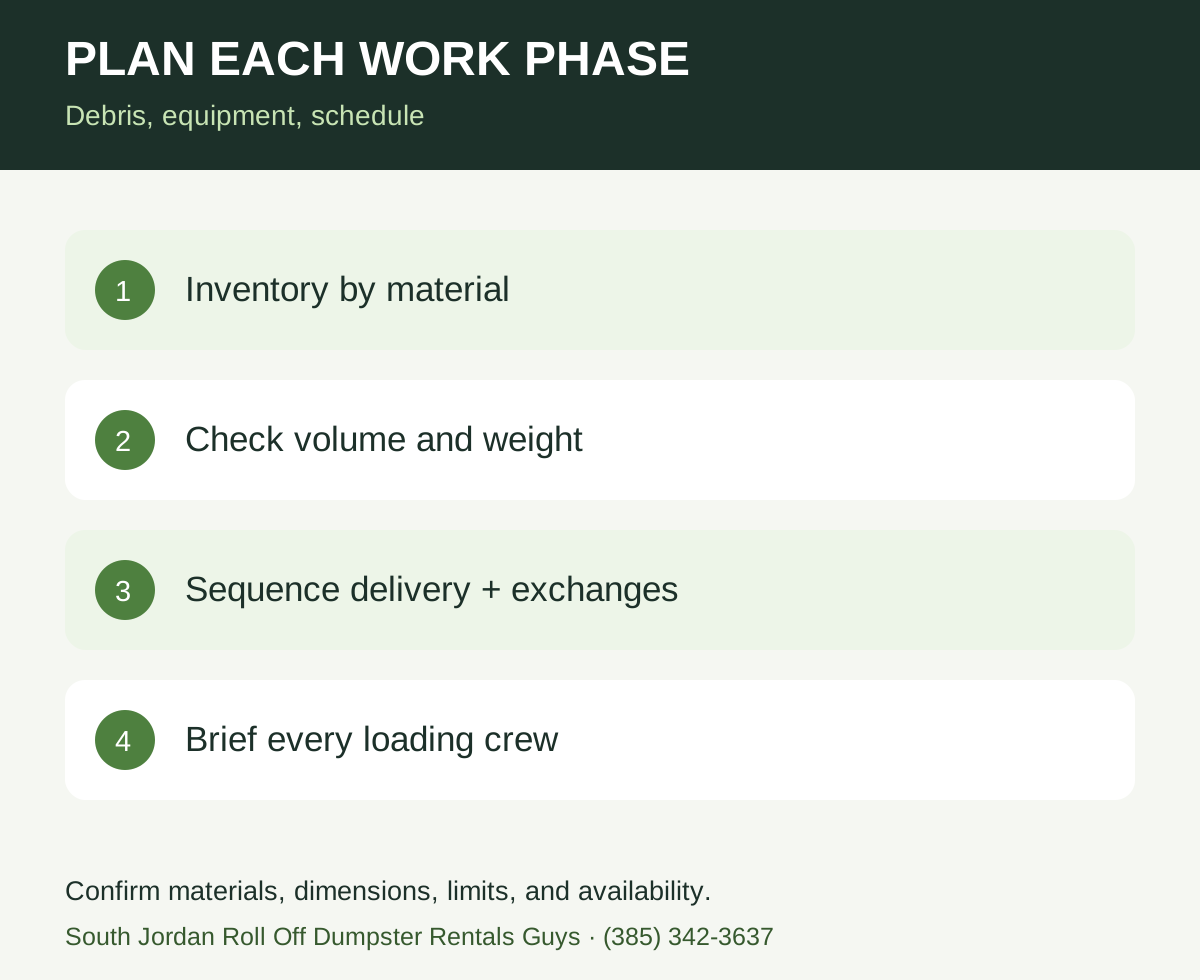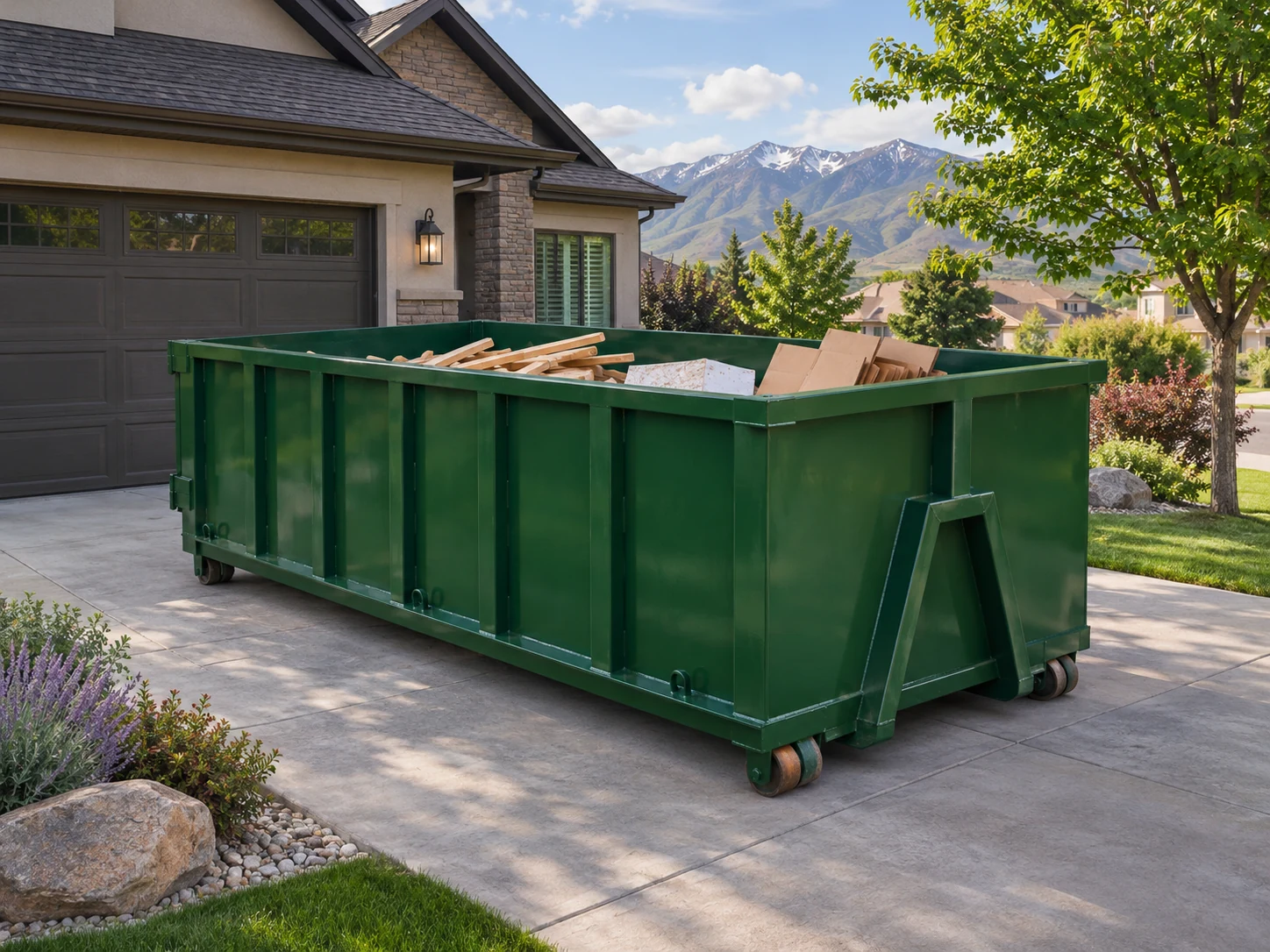
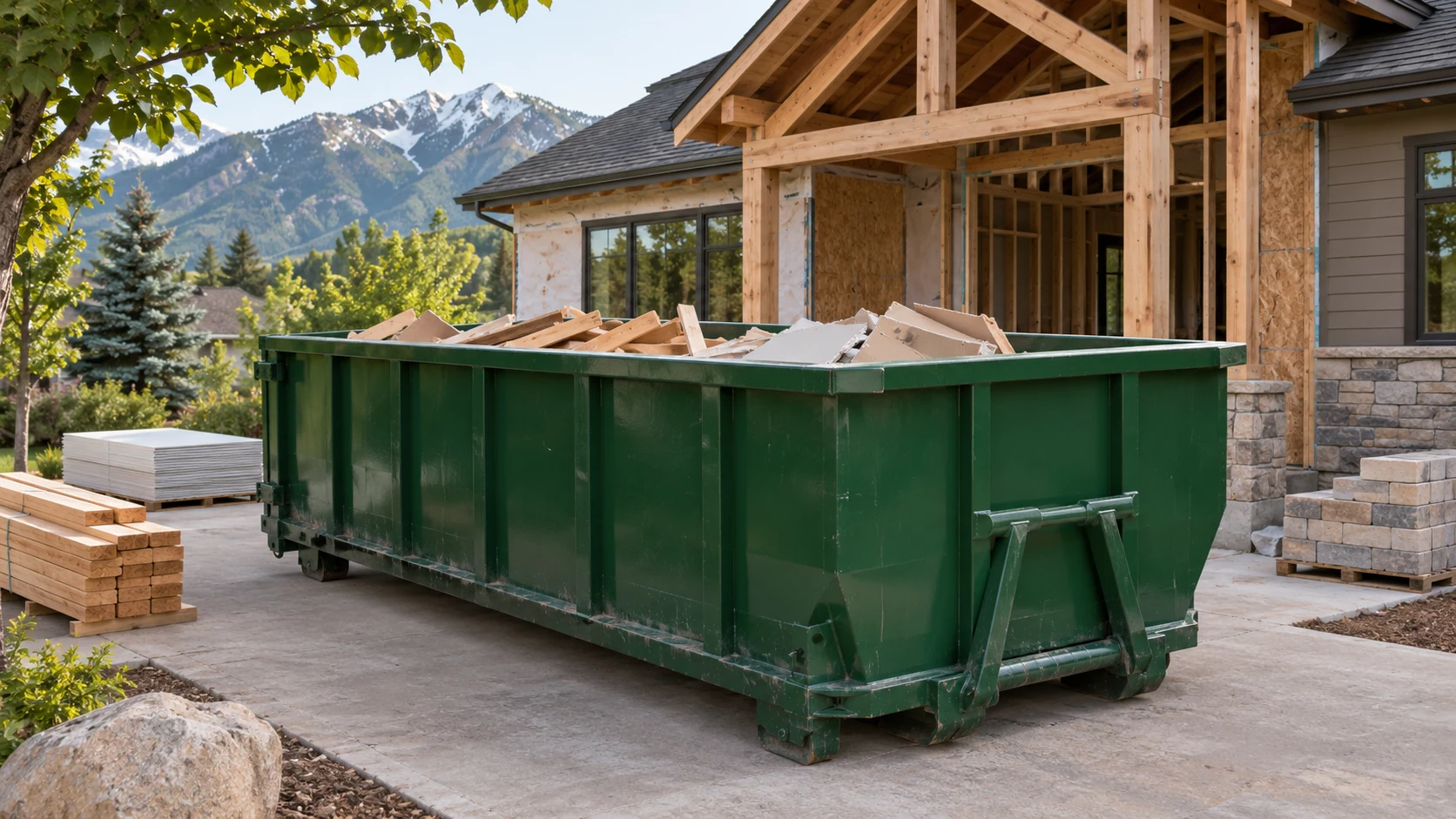
Plan a construction dumpster by identifying the debris streams, estimating volume and weight separately, and matching delivery and pickup to the work sequence. Confirm site access and material acceptance before demolition begins. A container size alone does not establish whether the load, equipment, or rental schedule fits a South Jordan building project.
Make a debris inventory by phase
Break the project into the stages that generate waste. Demolition may produce fixtures, flooring, cabinets, timber, and dense material. Later work may add packaging, offcuts, and damaged supplies. List those categories separately and identify what is still unknown. The waste profile can change substantially between the first removal day and the final site cleanup.
Ask the project lead which materials may need separation. A general description of construction debris is not detailed enough to establish acceptance for concrete, soil, chemicals, or unknown material. Flag those items before requesting a container. If the project opens up an unexpected condition, treat that as new information requiring a check, not as automatic coverage under the first quote.
Estimate bulk without forgetting weight
Volume helps identify how much container space the load may occupy. Weight helps identify whether the intended material can be transported within the rental limits. Keep those estimates separate. A large pile of packaging and a smaller pile of tile may create very different handling questions even when both come from the same renovation.
Ask the rental team how to describe quantities in a useful way. Photos, material types, approximate dimensions, and the extent of removal can help. Do not invent an exact weight from a visual guess or assume the largest available dumpster is appropriate for dense debris. Obtain the material-specific loading rules and included weight allowance for the actual rental being considered.
Choose delivery timing around the work
Arrange delivery close enough to the debris-generating phase to be useful while allowing for a confirmed arrival window. An occupied driveway or work zone can affect other trades, deliveries, and inspections. Explain those constraints when asking about dates. Do not schedule a crew on the assumption that a requested delivery has already been accepted.
Identify what happens if work is delayed. Ask about changes to the delivery date, extensions to the rental, and the notice needed for pickup. If another person is authorized to request changes, share the contact information and agreed terms with them. Clear responsibility prevents several crews from giving different instructions about the same container.
Review the truck route and placement area
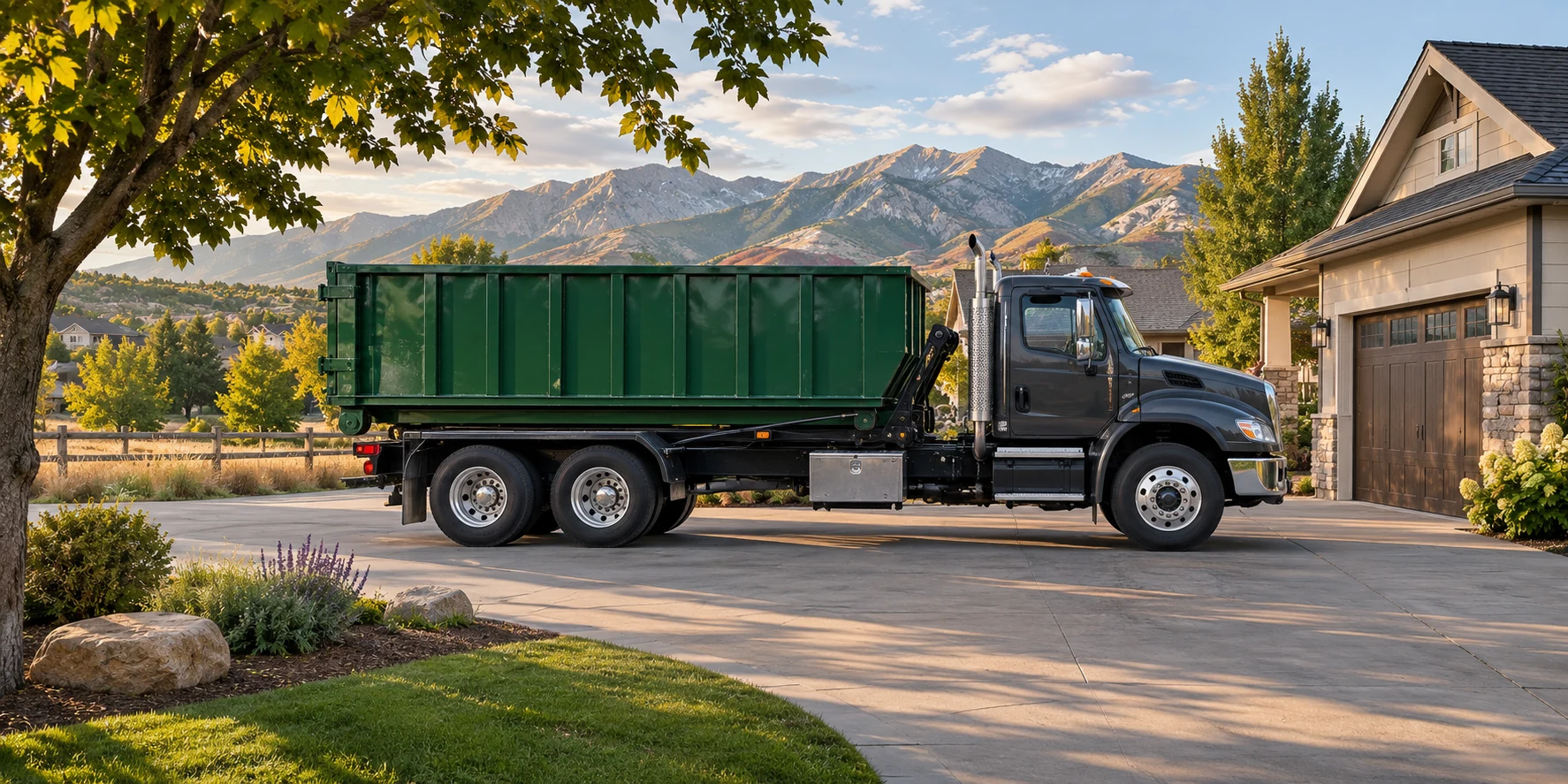
Assess the approach from the road, gate openings, turning space, slope, surface, and overhead obstacles. Share a proposed position and ask the team to check requirements for the actual equipment. The container's footprint is only one part of the operation. A truck needs workable access to place and remove it, and conditions can differ between delivery and pickup.
Keep required entrances and emergency access available. Obtain the relevant owner or authority approval before using shared or public space. If the project remains occupied, communicate the plan to residents, staff, or neighboring users. Keep a site contact reachable during the arranged window so questions can be answered without improvising an unapproved placement.
Give every trade the same loading rules
Post or distribute the accepted-material list and explain the fill limit to anyone using the container. Mixed crews can accidentally introduce items because each assumes another trade has checked them. Choose one person to monitor the contents and resolve questions. Keep a separate place for uncertain items until their handling route has been confirmed.
Do not add liquids, chemicals, batteries, or unidentified material to save time. If a material may be hazardous, seek the appropriate assessment and handling instructions. A general rental does not replace specialized work. For household renovation products, the EPA's hazardous waste guidance provides useful background on why ordinary-looking products may still need separate care.
Plan container exchanges before the unit fills
If the project may need more than one load, ask about exchange availability and scheduling when booking. An exchange involves removal and replacement, and the next unit is not automatically waiting when the first becomes full. Tell the team which work stage depends on the change and how much flexibility the schedule has.
Watch the load during the project so you can ask about the next step before reaching the permitted limit. Do not continue stacking above that limit while waiting for another container. Confirm whether the next load has the same material mix or needs revised terms. A later phase with dense debris may require a different plan from the initial mixed cleanup.
Use official disposal information carefully
Salt Lake County publishes material acceptance guidance for its facility. That information can help identify questions about restricted or special materials. It does not establish the terms of this rental, the receiving destination for your load, or whether the business uses that facility. Confirm those details with the provider responsible for the job.
Likewise, a municipal household program is not a universal rulebook for construction waste. Eligibility, material limits, and handling arrangements can vary. Ask about the specific project rather than assuming a neighbor's cleanup arrangement applies. The practical goal is a documented plan for the debris you actually generate, with a separate route for anything the proposed container cannot accept.
Close the loop before pickup
At the end of each work phase, review the container plan with the person coordinating the site. Compare the actual debris with the original inventory and identify the next material stream. If a change is needed, make the request while there is still time to discuss equipment and scheduling. Pass the revised loading rules to every trade that will use the next container. A short phase review can prevent the next crew from following instructions that were suitable for yesterday's demolition but no longer fit today's work.
Check the load, clear the truck approach, and confirm the pickup procedure. Tell the team if site conditions or contents changed. New material storage, parked equipment, or a blocked gate can make the original removal plan unusable. Review those conditions before the arranged window so the project contact has time to resolve them.
For construction dumpster rental in South Jordan, call (385) 342-3637 with the project phase, debris list, dates, and site details. Ask for acceptance, load limits, and the complete quote before committing the work sequence. A clear plan links the debris, equipment, and schedule together while leaving uncertain or restricted material out until it is properly assessed.