
Container size planning
Compare the 20 yard option to your load.
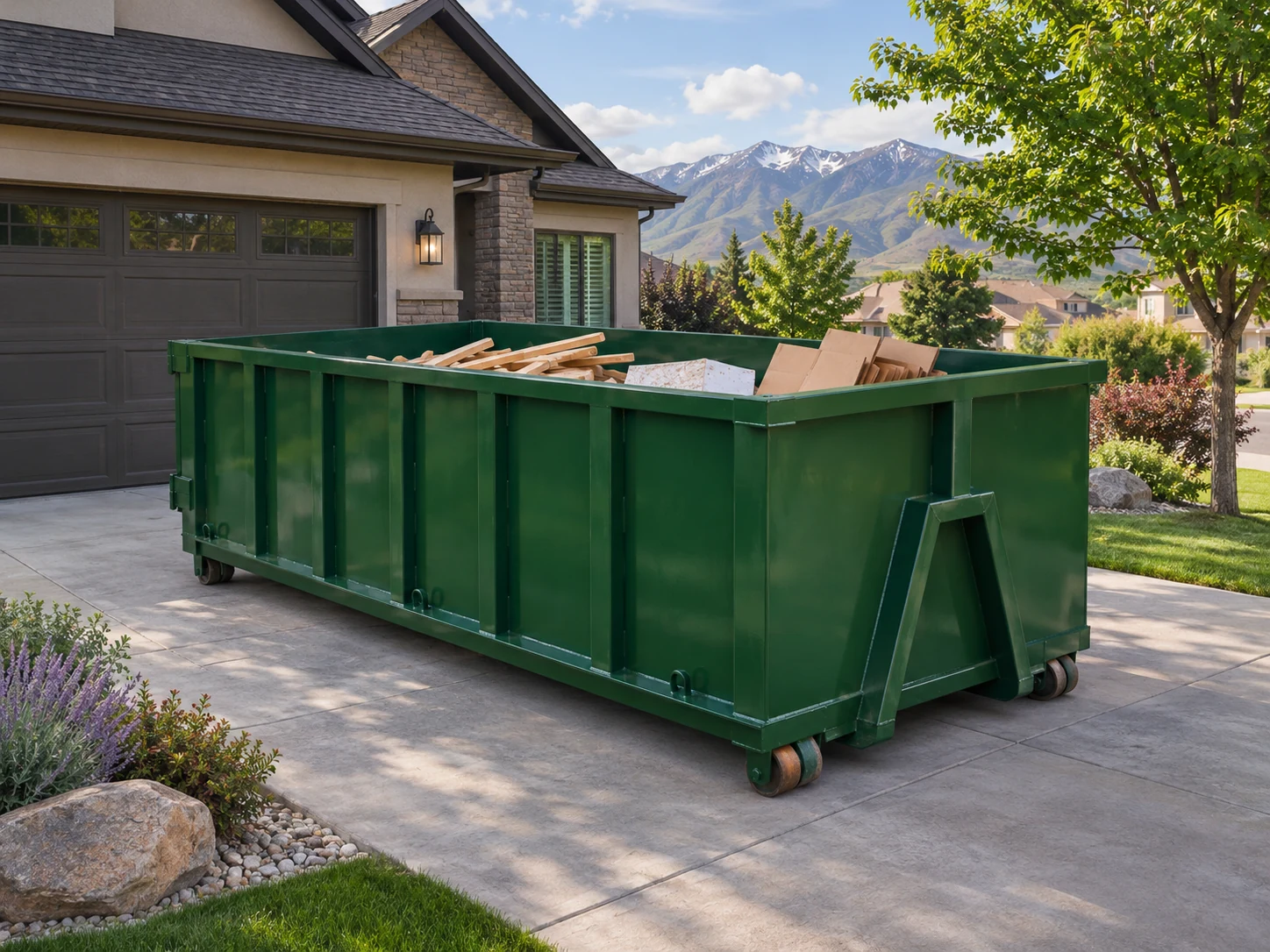
A 20 yard dumpster provides nominal capacity of 20 cubic yards for approved project debris. It is a size to discuss for South Jordan home cleanouts and renovation work, but capacity alone does not determine fit. Confirm actual dimensions, allowed weight, material type, driveway access, and availability for your dates.
Call us now(385) 342-3637
Explore our services 9 services
Plan the details before delivery
Materials, access, people, and rental terms all shape the request.
Use 20 yards as a volume starting point
The size name refers to nominal cubic-yard capacity. It does not guarantee that every project described as medium will fit. Furniture leaves air spaces, dismantled fixtures stack differently, and dense renovation material can reach a weight limit before the container is full. Describe the actual contents rather than choosing from an informal project label.
One cubic yard is 27 cubic feet, so 20 cubic yards represents 540 cubic feet of nominal volume. That arithmetic explains the unit; it is not a prediction that you can load an equivalent solid block of material. The usable load still depends on the container, its fill limit, the debris shape, and the rental's weight restrictions.
Create an inventory before making a size decision
List the largest objects and estimate the extent of the work. For a room renovation, identify cabinets, flooring, packaging, furniture, or other material separately. For a cleanout, note whether bulky objects can be safely dismantled before loading. Photos and basic item dimensions may make the discussion more useful than a single estimate of truckloads.
Compare your inventory with the rental terms. Ask which materials are accepted, how much weight is included, and whether special items change the quote. A 20 yard container may be suitable for one household project and unsuitable for another of similar floor area. The distinction often comes from the material and access rather than the number of rooms.
Check the real container against the placement area
Ask for the length, width, and height of the specific unit and the delivery equipment's access requirements. Container dimensions vary, and a generic diagram cannot confirm your driveway. Explain gates, slopes, overhead obstacles, parked vehicles, and any surface concerns. Leave room for the loading method you plan to use during the rental.
If a door is part of the container, ask how much operating room it needs and which side should face the loading area. Consider how household members will reach the property while the dumpster is present. Confirm any owner, association, or public-space permission before relying on a particular position. Keep the approach clear for removal too.
Compare the complete rental terms
A useful quote identifies the size, rental window, weight allowance, material rules, and pickup process. Ask what happens if your load grows or the work takes longer. A lower initial price is not a useful comparison when it covers different time or weight terms. Record the same details for each option you consider.
If the project may exceed the 20 yard plan, explain why before booking. The team can discuss the available alternatives without implying that a 40 yard unit is automatically the answer. Larger capacity still has limits, and dense material may require another approach. Confirm the final choice after volume, weight, schedule, and site access have been considered together.
A practical project check
A garage clearout, measured by the inventory.
For a garage and spare-room clearout, count large objects before smaller bags and boxes. Note whether shelving stays assembled and furniture fits the loading route. Discuss the 20 yard option using that inventory. Identify renovation debris separately because it changes the weight discussion, and resolve uncertainties about size before delivery.
Read the related planning guide