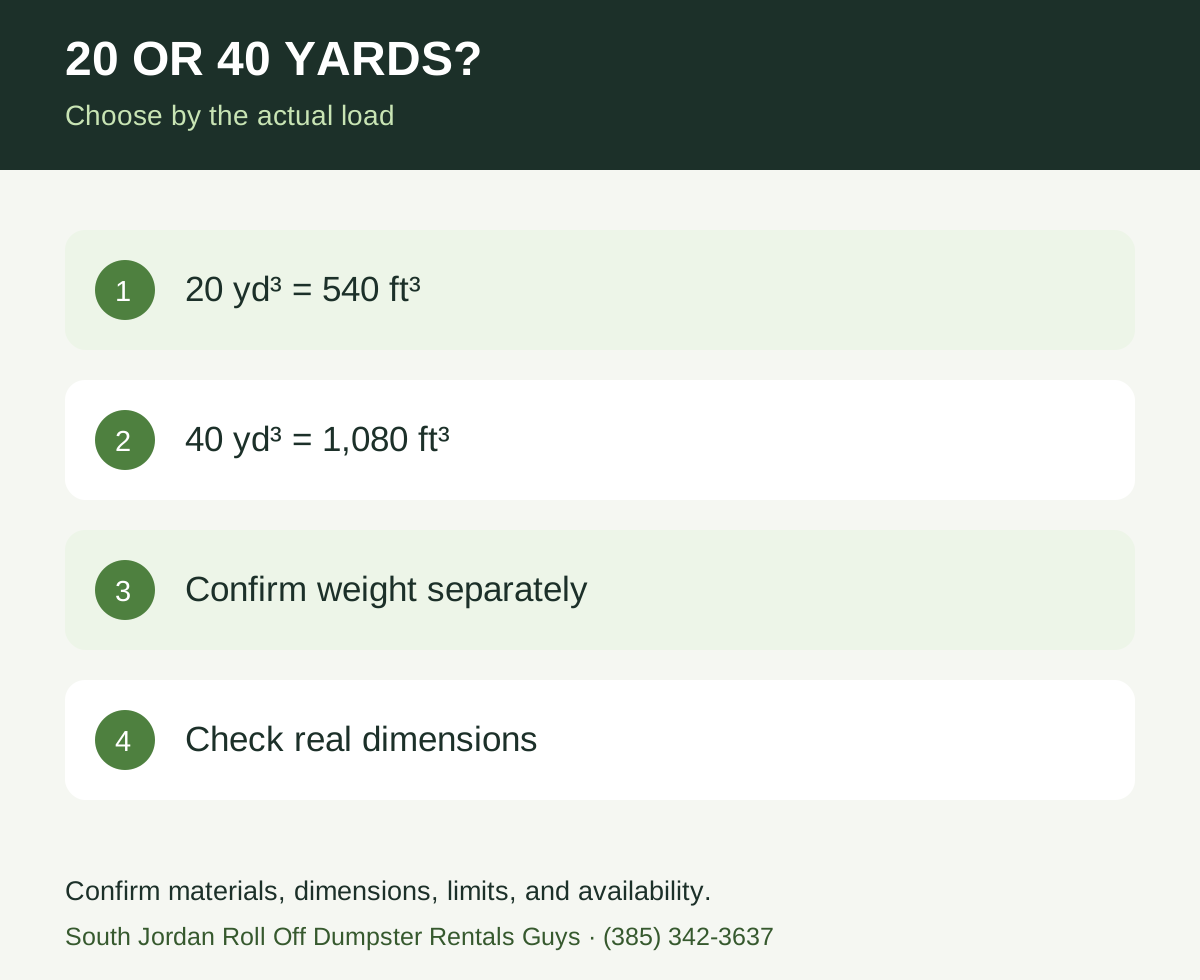
A 40 yard dumpster has twice the nominal volume of a 20 yard dumpster, but the better choice depends on debris weight, physical access, and the rental terms. Start with the material inventory and the available placement area. Then ask which actual container fits that project and the dates you need.
Start with what you are removing
Write down the main contents before comparing size labels. A garage containing furniture creates a different load from a bathroom renovation with tile and fixtures. Both may look like a modest project on a calendar, yet their volume and weight behave differently. Include the largest objects, the extent of demolition, and any material you are uncertain about.
Photos can support that description, but they do not replace it. A photograph may hide the depth of a pile or make dense material look insignificant. Explain whether the load will include flooring, cabinets, packaging, furniture, or yard debris. Identify unusual items separately so the size discussion does not imply acceptance for everything pictured.
Understand the capacity arithmetic
One cubic yard contains 27 cubic feet. Multiplying gives 20 × 27 = 540 cubic feet and 40 × 27 = 1,080 cubic feet of nominal volume. These figures explain why the larger size offers twice the space. They do not predict how many rooms or pickup loads your actual project will fill.
Real debris has gaps, awkward shapes, and loading restrictions. A sofa does not pack like loose boards, and a cabinet may occupy substantial space even when it is mostly empty. Safe dismantling can change packing efficiency, but never dismantle an unknown or hazardous item simply to fit it in. Ask about difficult objects before loading begins.
Keep weight separate from volume
The size label does not state the rental's weight allowance. Ask for that allowance explicitly and explain any dense components. Concrete, brick, soil, roofing, and similar materials can need a material-specific plan. A container may reach its permitted weight before its apparent volume is used, so a larger size is not a general solution to a heavy load.
Request the rules for the actual material, including any lower loading level or need for separation. Avoid mixing a dense stream into general debris on the assumption that the unused space makes it acceptable. If the materials change during work, ask again before loading the new contents. The original plan only covers what was accepted.
Compare the actual equipment dimensions
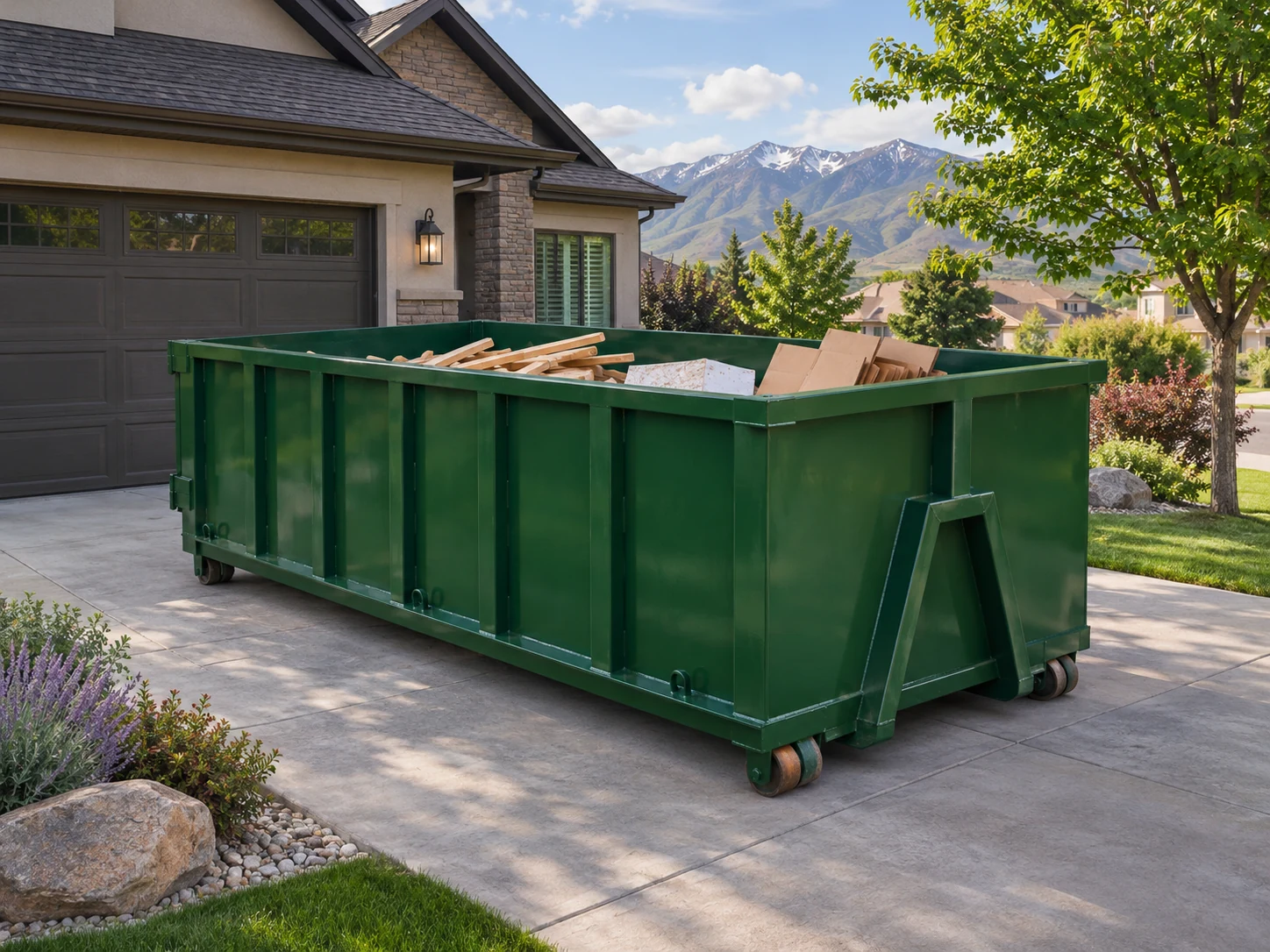
Ask for the physical length, width, and height of the available unit. Capacity labels do not establish universal external dimensions. The same nominal size can have a different shape depending on the container. Check any loading door and the room it needs to open, especially when large objects will be carried into the unit.
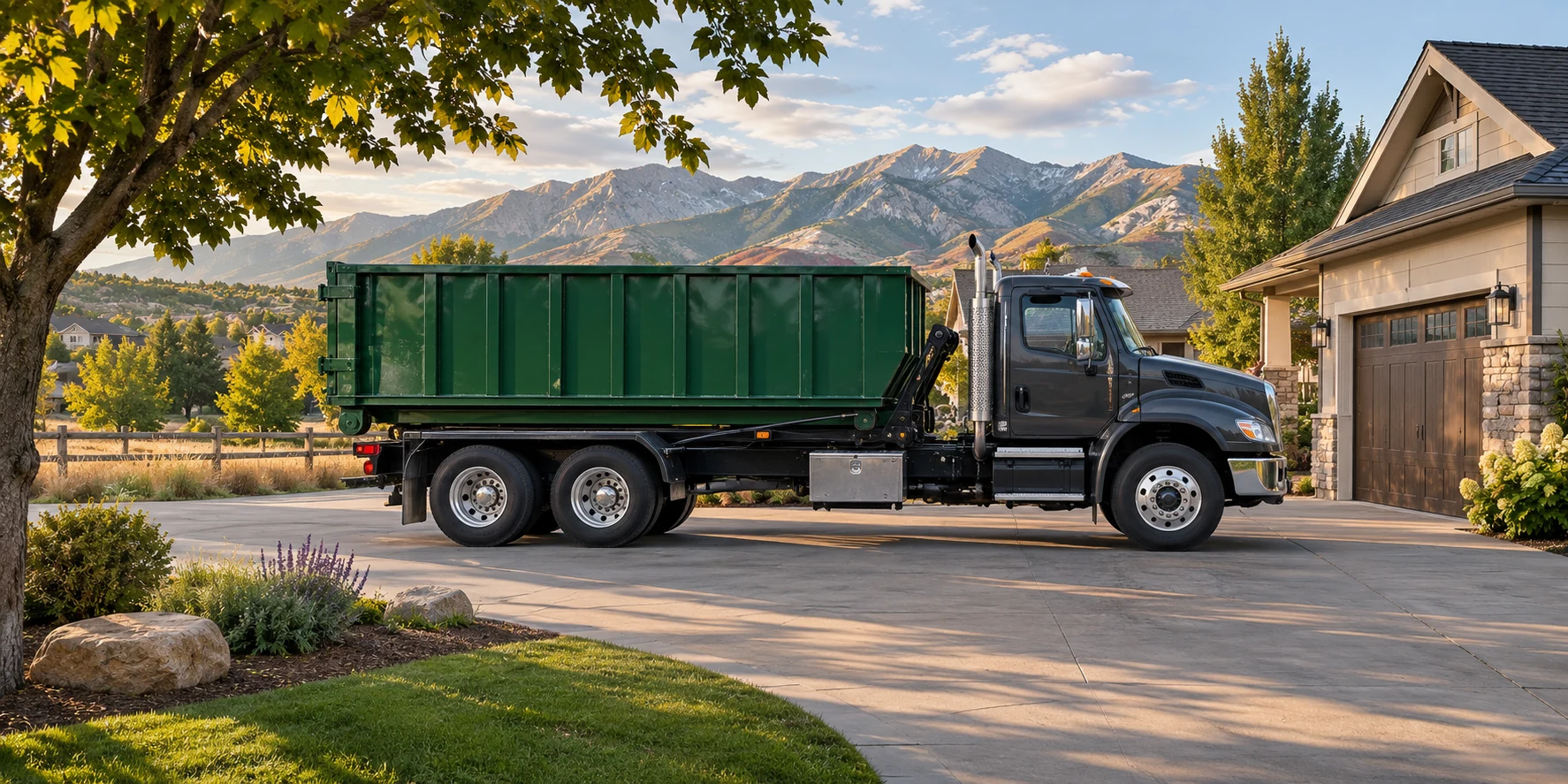
The truck also needs a workable approach and unloading area. Describe the driveway, gate, turning space, slope, surface, and overhead obstacles. A rectangle drawn on a driveway shows only a possible footprint; it does not prove the truck can deliver there. Let the delivery team confirm its equipment requirements before committing other project activities to that position.
Use project scenarios to refine the choice
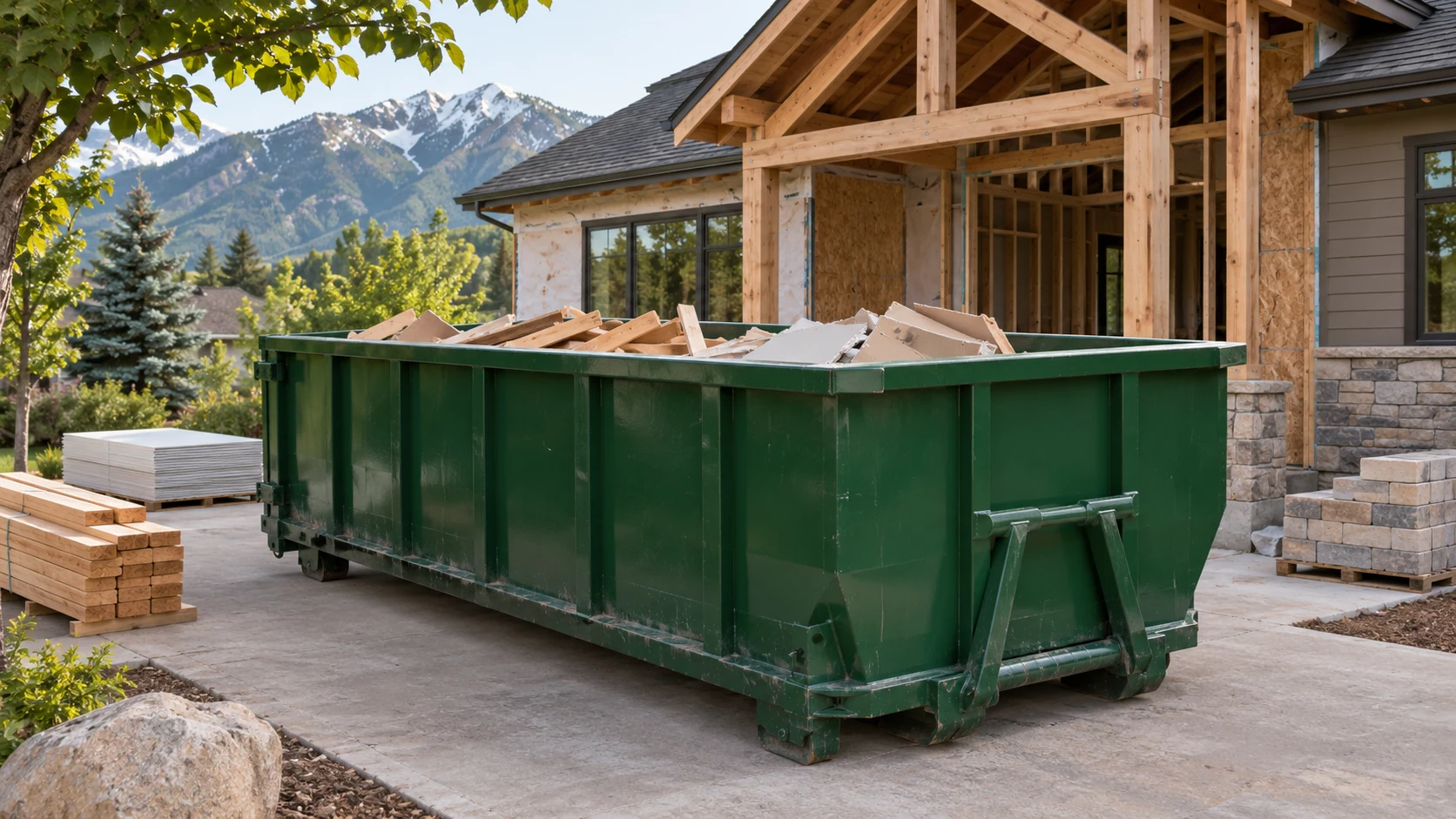
For a household cleanout, compare the furniture inventory with the available loading space. Ask whether a 20 yard option provides enough capacity without making daily access unnecessarily difficult. For a commercial refit, consider whether bulky fixtures arrive in one phase or several. A larger container may be worth discussing when the project produces substantial light or bulky material.
For construction work, start with the debris stream rather than defaulting to the largest option. A high-volume container may support some mixed building projects, while dense material may require another arrangement. Describe the sequence of work, the likely quantities, and any uncertainty that could change the load. These are evaluation examples, not guaranteed size recommendations.
Compare the same rental terms
Ask each provider for the container size, included weight, rental duration, delivery arrangement, pickup process, and accepted-material list. A quote for a different weight allowance or time window is not directly comparable just because the size label matches. Request any conditions that change the charge, including project extensions or additional handling for unusual contents.
Consider the practical cost of the plan as well as the initial quote. If a smaller unit requires a later exchange, ask about the availability and terms of that exchange. If a larger one blocks important access, consider the disruption during the rental. The useful comparison is the complete arrangement for your project, including the uncertainties that still need answers.
Check restricted materials before deciding
Set household chemicals, batteries, electronics, and refrigerant appliances aside for an individual disposal decision. The EPA's household hazardous waste guidance explains why some common household products need special care. A larger dumpster does not remove those restrictions, and a private rental does not automatically follow the rules of a public collection program.
Salt Lake County also publishes material acceptance information. Use that resource to identify questions, then confirm the rules for your specific rental. Do not assume this business uses a particular facility or that every item accepted at a facility can be placed in your container. Transportation and rental conditions may differ from direct facility acceptance.
Make the final decision with five checks
Keep a short decision record with the inventory and proposed size. Note what the provider has confirmed and what remains an estimate. If the project grows, that record shows which assumption changed: more bulky objects, a new dense material, additional rental days, or a different placement. Revisit the affected term instead of automatically changing every part of the plan. Share the accepted arrangement with helpers so they understand that available space does not authorize extra materials or loading beyond the agreed limit.
Before choosing, confirm the inventory, expected weight, actual dimensions, placement access, and rental window. Can the load stay within the agreed limits? Can people and equipment still use the property during the rental? If either answer is uncertain, raise it before booking. A clear answer to those questions matters more than choosing a familiar size name.
South Jordan customers can compare the 20 yard rental and 40 yard rental pages, then call (385) 342-3637 with the project details. Ask the team to confirm availability and the full terms for the proposed load. An inquiry begins that discussion; it does not reserve a container or establish a final price.