Large-item planning
Start with the objects you need to remove.
Bulk item disposal starts with an item-by-item check of what you want to remove. South Jordan customers should describe the objects, dimensions, materials, and access before arranging a container. Confirm which items are accepted and whether any carrying, dismantling, appliance handling, or other labor is included separately.
Call us now(385) 342-3637
Explore our services 9 services
Plan the details before delivery
Materials, access, people, and rental terms all shape the request.
Make an item list instead of a single pile estimate
List sofas, tables, shelving, mattresses, appliances, or other large objects individually. Note approximate dimensions and whether the item contains electrical parts, fluids, batteries, or refrigerant. An object can be bulky without being suitable for an ordinary dumpster. Item-level information helps identify those exceptions before the container is loaded.
Separate things that might be donated, reused, or recycled from the disposal load. Check with the receiving organization before setting items aside for collection; a possible donation is not an accepted one until its recipient agrees. For the remaining load, describe any objects that cannot be safely dismantled or moved through the available route.
Distinguish container rental from removal labor
A dumpster provides a place to put approved items. Do not assume that the rental includes a crew entering the building, using stairs, or carrying furniture outside. Explain where each large item sits and ask whether the requested handling is available. Confirm the scope and price before relying on help that has not been arranged.
If you plan to load the items yourself, consider their size, weight, and route to the container. Ask about the equipment and loading method without treating a general website suggestion as a safe plan for a particular object. Keep access paths clear and get suitable help for objects that are beyond the capability of the people doing the work.
Check special items before booking
Refrigerators, air conditioners, electronics, batteries, tires, and chemical-containing objects need specific acceptance decisions. Public disposal programs distinguish among these categories, and their rules do not automatically become the rules for a private rental. Tell the team exactly what the item is and ask which disposal route applies.
Do not hide restricted contents inside drawers, cabinets, or bags. Empty furniture and storage units so the material inventory is accurate. Keep product labels available for questionable chemicals or equipment, and avoid draining fluids or dismantling hazardous components just to make an object fit. Ask an appropriate provider for the required handling instructions.
Plan the load and the timing together
Bulky objects can use container space inefficiently when loaded without a plan. Describe the number and shape of the items and ask which size is appropriate. Confirm the available loading access and any fill limit. A large container still has weight and material restrictions, so volume is not the only decision.
Arrange the rental window around when authorized helpers can load. Confirm how pickup is requested and keep the approach clear afterward. If another item is added during the cleanout, check it against the approved list rather than assuming it is covered. Give the team a clear update if the original inventory changes in a way that affects handling or capacity.
A practical project check
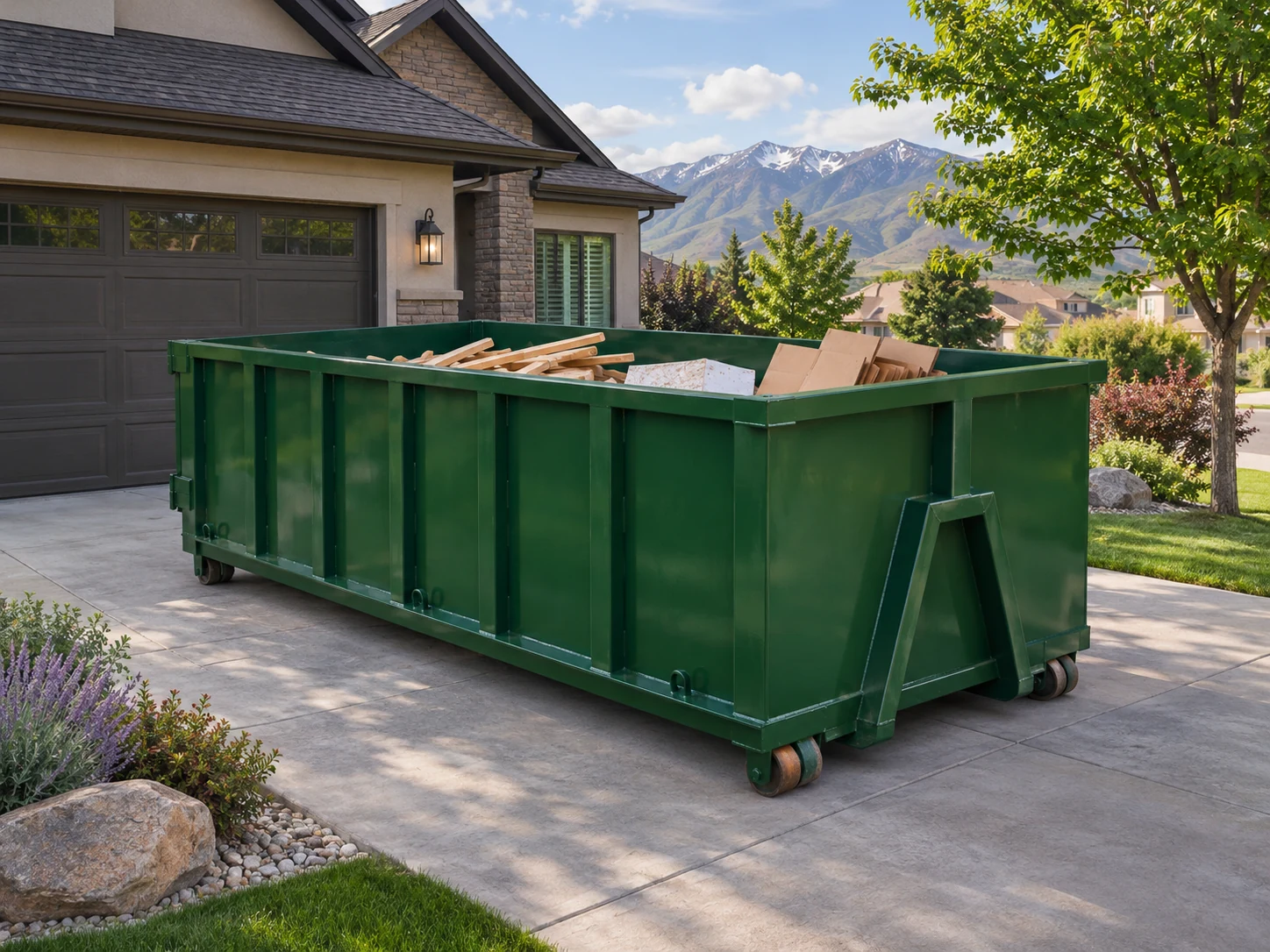
A furniture clearout, checked item by item.
For a furniture clearout, check drawers, cushions, storage compartments, and attached components. Remove personal belongings and identify electrical equipment or batteries. Measure large pieces and describe their current location. Resolve loading-route problems before delivery. Ask separately about dismantling or carrying help; a container recommendation does not establish an approved moving method.
Read the related planning guide