
Business cleanup planning
Plan the cleanup around your business.
Commercial dumpster rental helps South Jordan businesses organize approved debris from temporary projects. Start with the type of business, the materials being removed, the property address, and the working schedule. Confirm size, access, pickup arrangements, and written rental terms before employees or contractors begin loading the container.
Call us now(385) 342-3637
Explore our services 9 services
Plan the details before delivery
Materials, access, people, and rental terms all shape the request.
Match the rental to a defined business project
A temporary container can support an office move, stockroom cleanup, tenant turnover, or retail renovation. Define the work before requesting a quote. An office with old desks and shelving has different handling questions from a contractor removing flooring. List the main material categories and identify any contents that need an individual acceptance decision.
Tell us whether your business stays open during the project. A delivery plan needs to account for customers, accessible entrances, employee parking, emergency access, and other service vehicles. Describe the busiest times and any loading-dock rules. Those details help establish a practical arrival window without promising a time that has not been confirmed.
Coordinate tenants, owners, and contractors
Agree who has authority to approve placement and who will answer the driver's questions. A property manager may control the parking lot even when a tenant pays for the rental. Discuss shared spaces with the owner before the container arrives. Make sure contractors understand which container belongs to the project and which materials the rental allows.
Choose one contact for schedule changes. If several trades load at different times, keep an approved-material list where they can see it. Discuss whether the project may require a container exchange, and confirm how much notice an exchange needs. Treat delivery, removal, and replacement as separate scheduling details rather than assuming they occur automatically.
Ask for a complete scope and price breakdown
Request the container size, rental duration, included weight, accepted debris, and pickup procedure in the quote. Ask what changes the charge if material quantities grow or the project runs longer. A useful comparison considers all of those terms together; a headline price alone does not show whether two proposals cover the same work.
Provide realistic volume information. Include stockroom shelving, packaging, fixtures, broken equipment, or demolition material as separate categories. Flag dense materials and oversized objects even if they form only a small part of the load. Ask for the container's physical dimensions and unloading requirements before allocating a specific parking space.
Separate restricted and sensitive contents
Keep electronics, batteries, chemicals, and refrigerant appliances out of the general loading stream until their disposal route is confirmed. Business waste may follow different rules from a household collection program. A public program that accepts residents does not necessarily accept commercial loads, so check eligibility directly with the receiving facility.
Review confidential documents and data-bearing equipment before disposal. Your organization's information-handling rules still apply during a clearout. Do not use a general dumpster as a substitute for an approved records or electronics process. Give the team a final load description before pickup if the project has introduced materials that were absent from the original quote.
A practical project check
A tenant turnover, coordinated in advance.
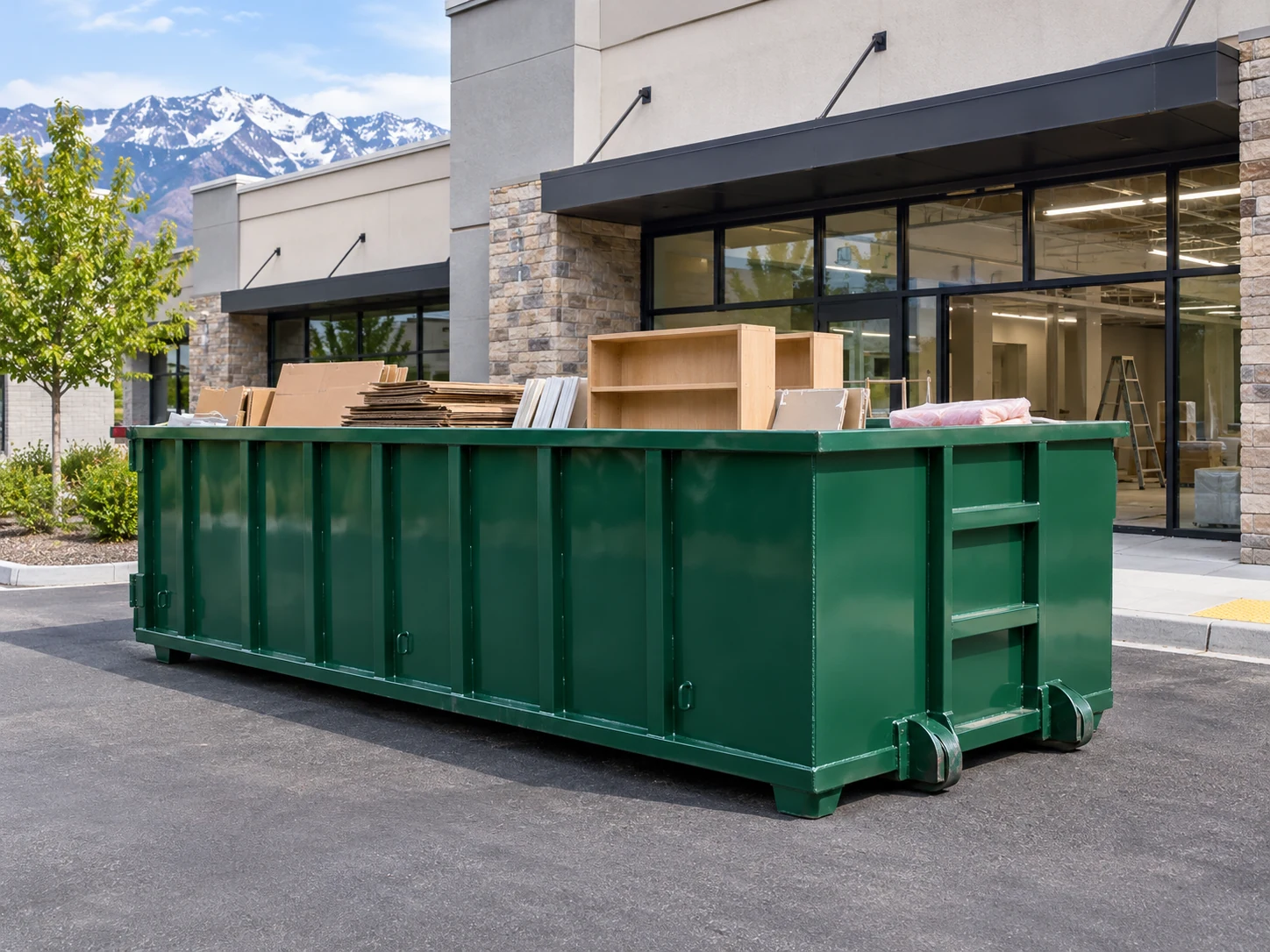
For a tenant turnover, separate outgoing possessions from fixtures the owner has approved for removal. Identify the property manager responsible for parking and placement. Coordinate other contractors using the loading dock, share the accepted-material list with each crew, and agree who can request pickup before the authorized cleanup is complete.
Read the related planning guide